
uPVC Ventilation Windows vs Traditional Ventilators: A Shift in Modern Home Design
A fan on the ceiling is lazily rotating on a freshly remodeled apartment as outside the traffic is buzzing through the hot summer sun. An old metal ventilator, in the kitchen corner,which is fighting hard to move the heavy air, rust zoning its years of exposure. A new uPVC ventilation window (tilting) is installed on the other side of the room that opens with accuracy, and a continuous flow of breeze slices the heat, curtains lift slightly, the room seems brighter, colder and significantly quieter.
This little change is indicative of a greater change in building design, ventilation is not an exception. It is emerging as an architectural decision which is performance-oriented.
Difference Between uPVC Ventilation Windows and Traditional Ventilators
Traditional ventilators are normally fixed or louvred apertures, which are meant to permit passive airflow. They had been greatly used in the earlier housing designs where the building density was less and thermal comfort requirements were modest.
uPVC ventilation windows are an engineered design ventilation system. They integrate regulated opening, sealing technology, insulation effectiveness and weatherproofing allowing occupants to control air movement according to the actual indoor environment. A properly executed uPVC installation process ensures these systems deliver consistent thermal and ventilation performance.
With the increasing density of urban places and the mounting pressure of the climate, the ventilating systems are now judged by quantifiable performance results and not by mere presence of airflow. Modern ventilation is no longer optional, it is a measurable performance parameter that directly impacts energy efficiency and occupant health.
Table of Contents
Airflow Efficiency and Indoor Air Quality Comparison
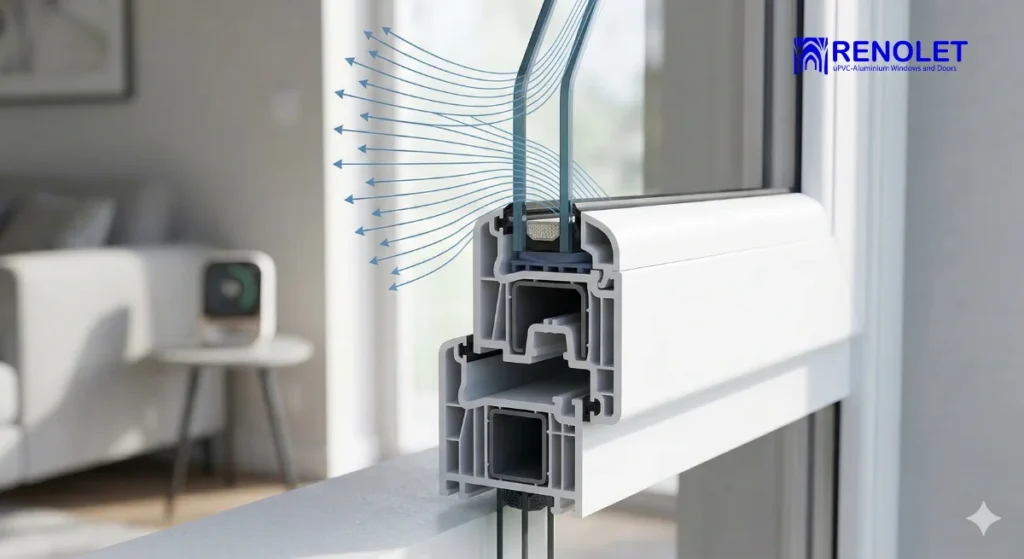
The ventilation windows are engineered to enhance air exchange in adjustable forms such as tilt or micro-ventilation. In comparison to fixed ventilators of equivalent opening size airflow modelling and post-occupancy evaluations have shown:
- 25-40% increase in effective air exchange rates.
- Risk of reduction in moisture in 30-50%
- Up to 35% lower probability of mould formation in humid interiors
The traditional ventilators permit the constant flow of air, but they are not controlled. This may result in either under ventilation of indoor heat peaks or over ventilation of external heat during summer afternoons.
In contemporary house design, professionals focus on adaptive ventilation- the capability of maintaining a balance between ventilation and a level of thermal comfort.
Energy Efficiency: uPVC Ventilation Windows vs Traditional Ventilators
The performance of ventilation is directly proportional to the consumption of energy.
The uPVC ventilation windows have multi-chambered profiles with compression seals which minimize unwanted air seepage. They can also reduce cooling loads considerably when combined with cross-ventilation planning.
Residential performance research in warm and composite climates proposes:
- 15-25% decrease in yearly cooling energy intake.
- 20-30% reduction in the air-conditioner run hours.
- Improvement of average indoor temperature stabilisation 1.5–2.5°C
With constant openings, traditional ventilators have the potential to add 5-10% to the cooling demand, especially in high-rise or roadside housing units.
uPVC Ventilation Windows vs Traditional Ventilators: Quick Comparison
- uPVC ventilation windows provide controlled and adjustable airflow
- Traditional ventilators allow passive but uncontrolled ventilation
- uPVC systems can reduce cooling demand by 15–25%
- They improve acoustic comfort and indoor temperature stability
- Lifecycle maintenance requirements are significantly lower
Not sure which window system fits your home? Get expert guidance based on your floor plan, climate exposure, and budget.
Performance Benchmarks of uPVC Ventilation Windows vs Traditional Ventilators
The performance of modern ventilation systems is measured with the help of façade engineering.
Air Permeability
- Best benchmark: Class 3 or higher
- Engineered systems offer 60–70% lower unintended air leakage
Water Tightness
- Recommended benchmark: Class 5A–7A
- Rain penetration resistance improves by 40–55%
Wind Load Resistance
- Class 3 systems withstand façade pressure up to 1200 Pa
- Structural deformation risk reduces by 30–45%
Thermal Transmittance
- uPVC ventilation windows: 1.0–1.5 W/m²K
- Traditional ventilators: Equivalent exposure often exceeds 4 W/m²K
All of these parameters enhance the building envelope performance by 10-18% in tropical urban settings.
Durability and Lifecycle Cost Comparison
The material resilience contributes significantly towards the performance in the long-term. The uPVC ventilation windows have corrosion resistance, resistance to moisture and UV, and have a life cycle of 20-30 years with a minimum of maintenance.
Lifecycle assessment suggests:
- 35-50% decrease in maintenance.
- 1/2 to 1/4 reduction in replacement frequency.
- Total lifecycle cost savings of between 18 – 28%
Traditional steel or wood ventilators may need regular painting, rust repairs or early replacement due to environmental wear. Many homeowners today also explore different imported uPVC brands in India to understand variations in quality, profile design, and durability before making a decision.
Acoustic Comfort in Urban Housing
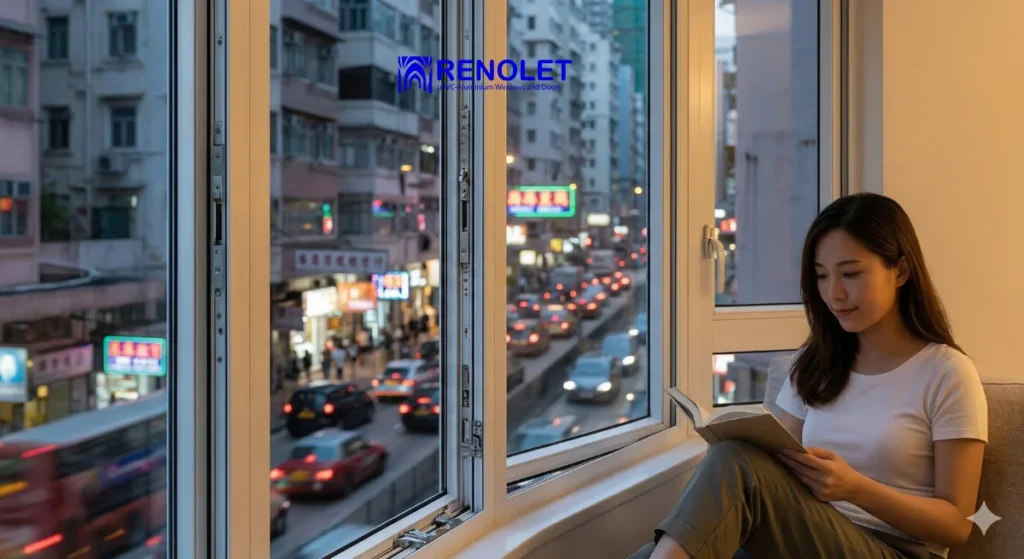
Urban ambient noise levels are often 65-85 dB in nature, so the solution to ventilation should also cover sound intrusion. The uPVC ventilation windows are sealed but still can achieve 20-35% of noise reduction which will increase the comfort and the quality of sleep indoors. Traditional ventilators are of low acoustic resistance, thus not being practical in the dense residential buildings.
Case Study: Improving Ventilation in Urban Residential Homes
A mid-rise housing renovation faced recurring occupant complaints of damp kitchen walls, uncomfortable heat retention, and intrusive traffic noise.
Problem
- Small metal ventilators, which restrict cross-ventilation.
- The humidity level inside the house is higher than the comfort level.
- Increased reliance on fans and air-conditioning
Solution
The contractor introduced a specific ventilation upgrade with the use of Renolet uPVC ventilation window systems. Adjustable ventilation apertures were added along natural air flow channels. The improved seal and controlled dimensions of the opening were useful in optimising the airflow without raising the heat gain.
Result
- Humidity in the house was lowered by about 32%
- Energy saved on cooling was cut by approximately 21%.
- The satisfaction with the comfort of the residents increased by more than 40%
The perceived property value was enhanced through improved performance of the facades. The intervention showed how the redesign of strategic ventilation could provide significant performance benefits without significant structural adjustments.
Future of Ventilation: Smart and Energy-Efficient Systems
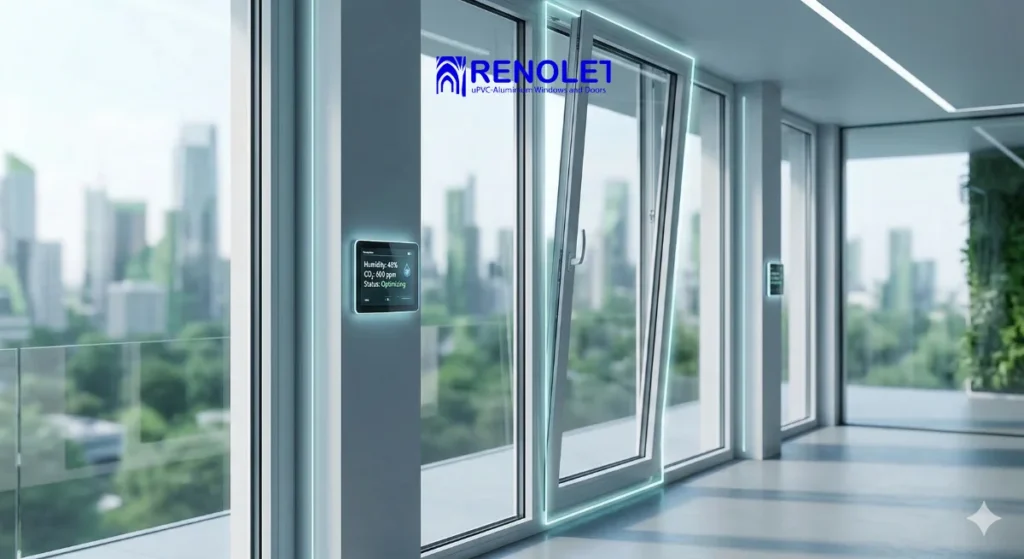
Ventilation will be a smart facade capability with the help of:
- Humidity and CO₂ sensor-based automated window operation.
- Integrity with passive cooling modeling in building design.
- Tighter standards in airtightness and energy performance of building codes.
- More implementation of climate-responsive facade systems in tropical cities.
Conclusion
The traditional ventilators have not been supplanted in low-cost or secondary airflow settings. However, in all parameters of performance, including airflow control, energy-saving, durability, and acoustic comfort, the performance of uPVC ventilation windows is 20-40% better in contemporary urban dwellings.
Today, ventilation is not merely about airflow, it is about comfort over the long-term, efficiency, and indoor well-being.


Pingback: uPVC Ventilation Windows for Humidity in Bangalore | Renolet