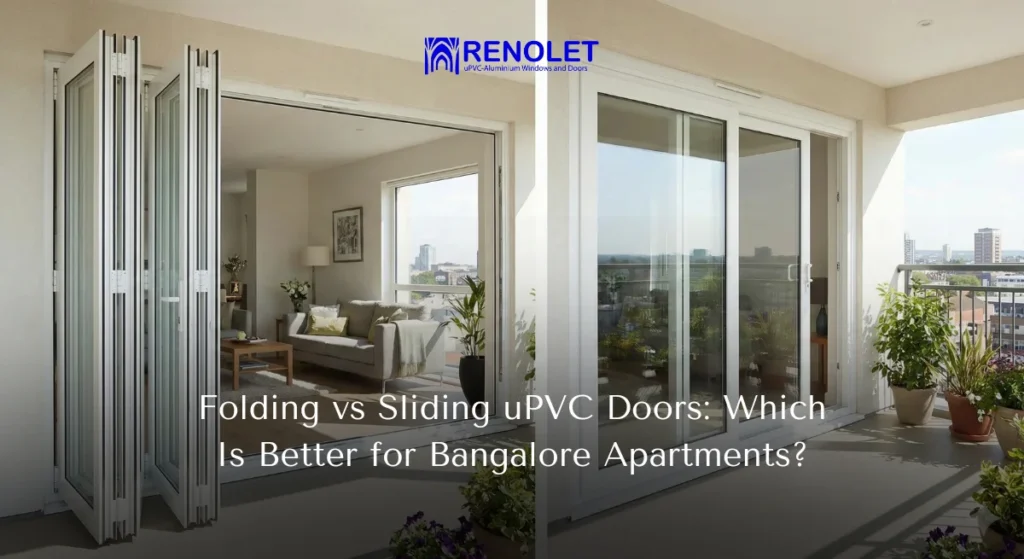
The wind blows on an evening over the Bangalore balcony. The city skyline is lit up with soft lights, and you imagine opening the doors of your living room to the outside world. There are days when you want a smooth space to have meetings with a wide area. On others you only wish that you had air, and yet not to lose comfort. It is at this point that some question comes up and that is, should you have sliding doors or folding doors?
At this point, the folding vs sliding uPVC doors comparison comes in.
Space utility, ventilation, insulation and longevity are important in Bangalore apartments. The right door system influences natural lighting, cooling system, noise reduction, and potential cost of long-term maintenance. The awareness of both alternatives can assist homeowners to make an investment that is viable and future-oriented. Understanding the uPVC installation process also helps homeowners evaluate durability and performance before making a decision.
Table of Contents
Space Utilization in Folding and Sliding uPVC Doors
Living in apartments requires clever space design.
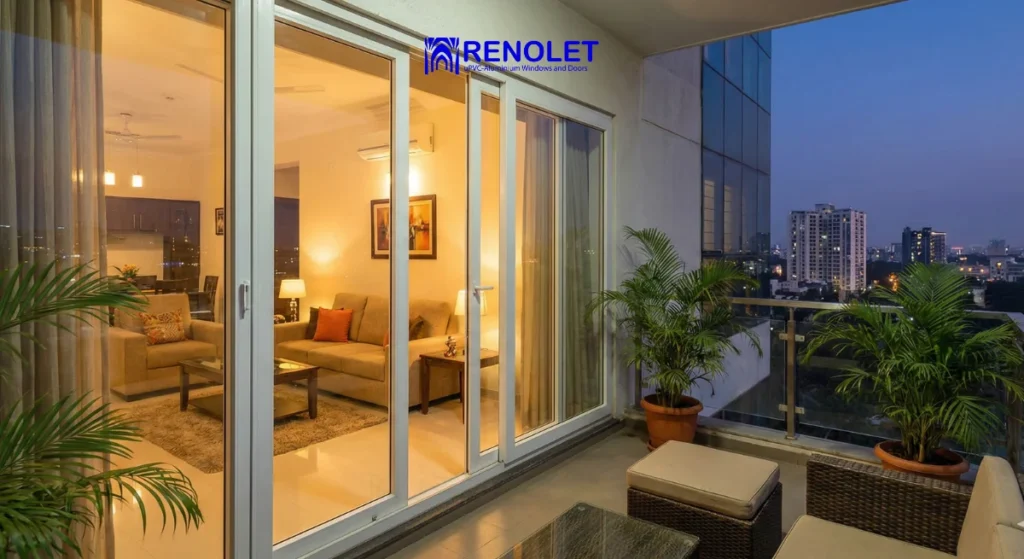
Sliding uPVC Doors
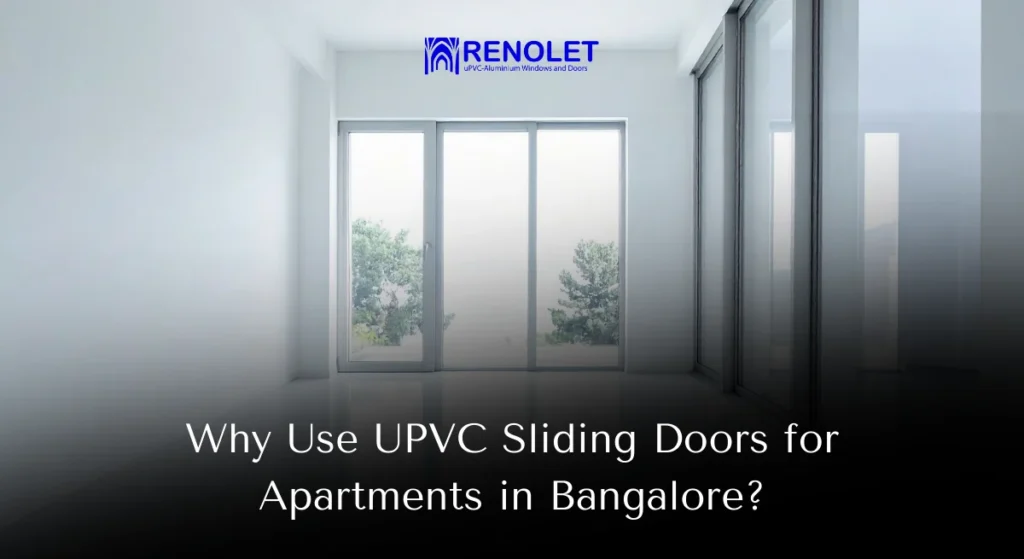
Sliding doors travel horizontally in tracks, with one sliding door overlaying another. They:
- Do not require swing space
- Suited to small balconies.
- Give wide glass walls so as to provide a continuous view.
- Offer a fresh contemporary look.
Sliding doors maximize the amount of floor space available without hindering the placement of furniture even in most Bangalore apartments that have limited size balconies. If you’re evaluating options specifically for city apartments, this guide on why uPVC sliding doors are ideal for Bangalore apartments gives additional insights.
Folding uPVC Doors
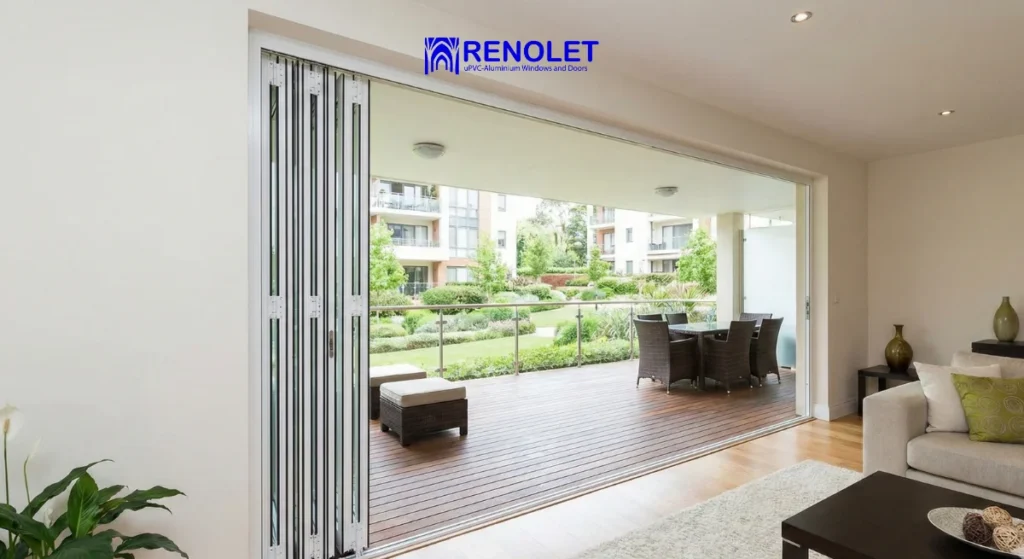
Bi-fold doors are constructed with several panels which collapse and pile up on a single side. They:
- Create a wide opening area
- Increase the indoor- outdoors connectivity.
- Improve airflow
- Provide adjustable opening arrangements.
Nevertheless, the stacked panels will take up side space when fully opened thus potentially reducing the clear opening space in smaller apartments slightly.
Space availability is one factor that may determine the difference between folding and sliding uPVC doors. If you are planning a balcony renovation, this detailed guide on how to choose uPVC doors for balconies in Bangalore can further help compare layout compatibility
Thermal Insulation and Climate
The climate of Bangalore consists of hot weather and seasonal rains. An important factor is thermal efficiency.
Good uPVC doors have been made with:
- Multi-chamber Profiles of insulation.
- Reinforced steel cores
- UV-stabilized formulations
- High-tech weather sealing systems.
Sliding uPVC Doors
Sliding doors are usually more air tight as they contain fewer panel joints. This assists in keeping the U-values lower (usually between 1.2 to 2.0 W/m 2K in high-end systems) in order to offer less heat transfer in summer.
Folding uPVC Doors
Folding doors are also insulated but have several hinges and panel connections. Unless they are produced to IS standards and tested to ASTM standards on air infiltration and water penetration, they can permit a small amount of air to escape into the atmosphere over time.
In the case of high-rise apartments in Bangalore that are open to wind pressure, the structural performance which is tested under the ASTM structural load recommendations becomes particularly relevant.
Ventilation and Openness
When you want maximum openness, then there is an obvious choice of folding doors.
- Folding doors may open to 80-90% of the door.
- Ideal for entertaining guests
- Design a high-end, villa-esque balcony.
In contrast, the sliding doors usually have a half-way opening of the doorway. Although this is adequate in ventilating, it lacks the expansive opening effect.
In small city and apartment balconies, sliding systems can be adopted to facilitate ventilation without excessive complexity of space utilization.
How Do Folding and Sliding uPVC Doors Compare? (Side-by-Side Technical Analysis)
Parameter | Sliding uPVC Doors | Folding uPVC Doors |
Space Efficiency | Space Efficiency | Space Efficiency |
Opening Capacity | 50–60% opening | 80–90% opening |
Thermal Insulation | Better air tightness | Good but more panel joints |
Wind Resistance | Stronger for high-rise | Depends on hardware quality |
Maintenance | Low | Moderate |
Cost | Budget-friendly | Higher installation cost |
Sound Insulation | Better sealing | Slightly lower due to joints |
Ideal For | Compact apartments | Luxury or large balconies |
Case Study: Balcony Upgrade in HSR Layout
Location: HSR Layout, Bangalore.
Apartment Type: 2BHK
Objective: To increase the ventilation and lessen the amount of heat accumulation.
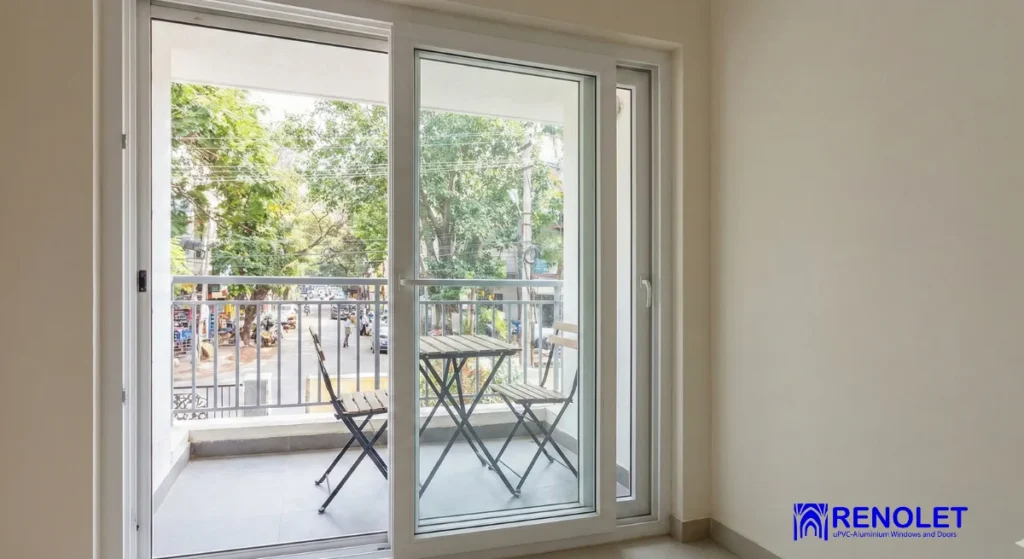
The homeowner first favored the use of folding doors due to their ability to open widely. Nevertheless, because of the narrowness of the balconies and the fact that high-rise uncovered areas are prone to strong winds, sliding uPVC doors were suggested.
After installation:
- During summer, indoor temperature decreased.
- Traffic noise intrusion was reduced.
- The level of maintenance required was minimal.
- The natural light was also getting better.
The house owner reached a conclusion that sliding uPVC doors were more appropriate in small apartment designs compared to folding doors.
What Are the Cost Considerations in Folding vs Sliding uPVC Doors?
Budget is a practical element of decision making.
- Sliding doors are relatively less expensive.
- Folding doors contain additional hardware and installation.
- Maintenance costs are slightly higher for folding systems
| Cost Factor | Sliding uPVC Doors | Folding (Bi-fold) uPVC Doors |
| Price per Sq. Ft. | ₹450 – ₹950 | ₹850 – ₹1,800+ |
| Typical Balcony Cost (80 sq. ft. approx.) | ₹36,000 – ₹76,000 | ₹68,000 – ₹1,44,000+ |
| Hardware & Tracks | Simple rollers (Included) | Heavy-duty hinges & pivots (Premium) |
| Installation Time | 1 – 2 Days | 2 – 3 Days (Complex alignment) |
| Annual Maintenance | Low (₹500 – ₹1,000) | Moderate (₹1,500 – ₹2,500) |
| Value for Money | High (Ideal for mid-range) | Luxury (High investment) |
In the mid-sized Bangalore apartments, the sliding doors usually play off with a better price-to-money ratio and do not compromise performance. For specific environments like bathrooms or moisture-prone areas, door selection also depends on humidity resistance. You can explore options in this guide on uPVC doors for bathrooms.
Commercial Insight: Choosing the Right Brand Matters
In addition to design, the technical quality defines the long-term outcome. Renolet is a sliding and folding uPVC door design that is designed to suit the Indian climatic conditions.
Their systems feature:
- Profiles of multi-chamber thermal insulation.
- Steel central cores.
- UV-resistant materials
- Hardware compatibility in line with the IS standards.
- Durability and water penetration testing to ASTM standards.
Selecting a technically compliant system will result in a structurally stable system that withstands weather and performance stability over the years.
Conclusion
So, which is better?
Choose Sliding uPVC Doors if:
- There is a small balcony.
- You prefer low maintenance
- You prefer improved air tightness.
- Efficiency in the budget is significant.
Choose Folding uPVC Doors if:
- You desire the greatest amount of opening.
- You are very much luxury-driven.
- You have larger balconies
Sliding systems provide a convenient compromise of insulation, cost-effectiveness and convenience in maintenance in most Bangalore apartments. Nevertheless, the openness of folding doors can be useful in premium apartments with bigger layouts.
Comparing the folding and sliding uPVC doors, you may aim at the technical compliance, insulation standards, and quality of the installation. The decision will help make life in the changing urban environment of Bangalore more comfortable, economical and long-term valuable.