Why uPVC Windows Are a Smart Choice for Sustainable Living in Bangalore
Stroll into any middle rise apartment in Whitefield on a blazing May afternoon. The AC is on 24/7, electricity bills are exceeding 8,000 a month and the noise of the road in the Outer Ring Road flows directly through the aluminium frames. The city of Bangalore with its high urban density, unpredictable rainfall patterns, and over 300 days of sunshine each year makes being on the wrong side of the window not only a hassle but a costly affair consuming energy and ultimately unsustainable. It is exactly there that the discourse about eco-friendly uPVC windows in Bangalore starts not in a product brochure, but in the felt disappointment of the homeowners being at odds in seeking comfort, affordability and conscience.
More than 30% of all energy used in India is in the building industry, and nearly 60% of domestic electricity bills in urban South India is residential cooling. With the city of Bangalore growing in both vertical and horizontal ways, the type of material used in the fenestration of buildings today will determine the carbon footprint of this city over the next 30 years.
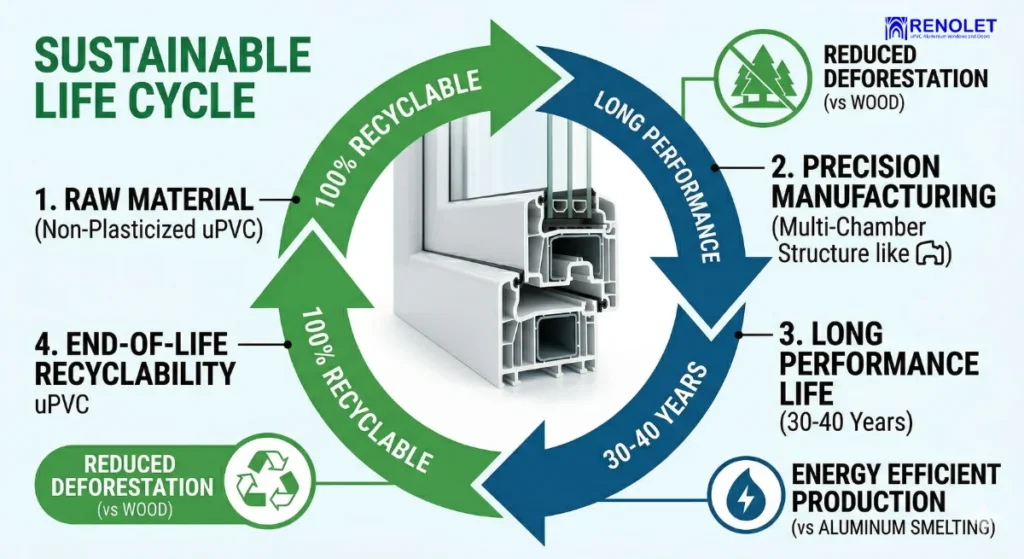
Table of Contents
What Makes uPVC Windows an Eco-Friendly Choice in Bangalore?
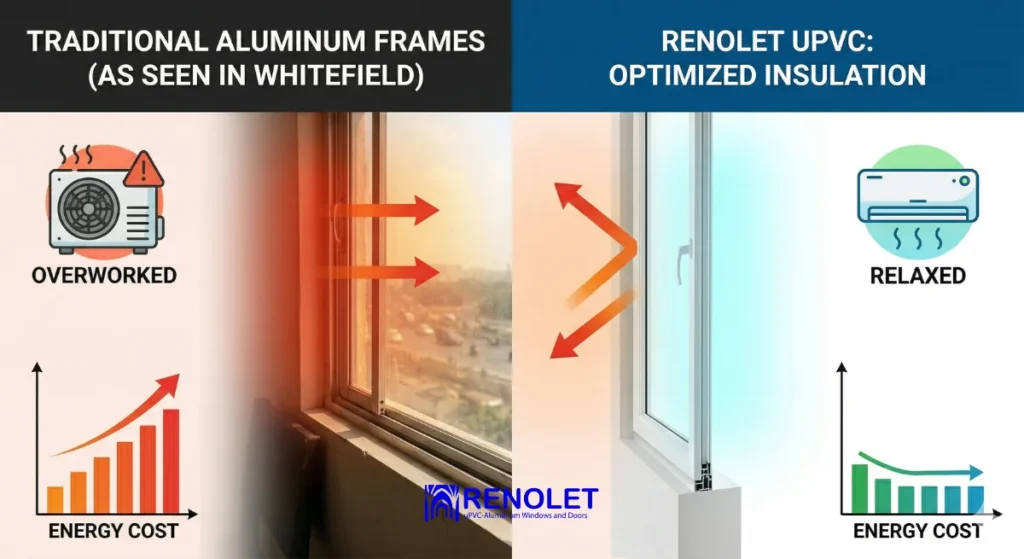
uPVC is a rigid thermoplastic made without using plasticizers – the substances that make regular PVC soft but unstable in chemicals in the long run. The outcome is a frame material that is dimensionally stable, chemically inert and superior to wood or normal aluminium in structure through the changing swings of monsoon-dry season at Bangalore. Many of these performance characteristics are tied to engineering decisions reflected in the unique features of uPVC windows and doors.
Three technical pillars outline the reason why uPVC is more sustainable than traditional alternatives:
Thermal Insulation Benefits of Eco-Friendly uPVC Windows in Bangalore
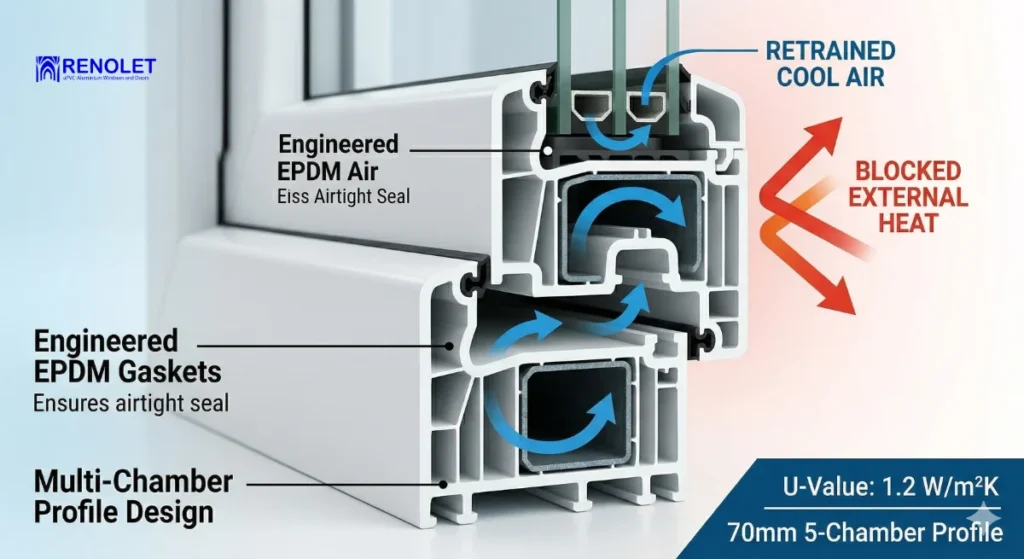
The uPVC windows offer a U-value of 1.2 W/m 2K; in contrast to 5.8-6.5 W/m 2K on a standard single-pane aluminium frame. Windows contribute around 25–30 per cent of the total heat gain in a building and with double glazing, heat loss can be lowered by up to 6070 per cent over traditional systems, a figure now quoted in the text of the new ECBC thermal performance standards, published by Bureau of Energy Efficiency. This is one of the reasons many homeowners see a measurable drop in cooling costs, especially when looking at ways to reduce electricity bills with energy-efficient windows.
Multi-Chamber Profile Design
The uPVC profiles by Renolet consist of 5-7 hollow internal chambers which form natural dead-air pockets which serve as an insulation barrier. It is not cosmetic as it is thermal engineering. Engineered EPDM gaskets cause air infiltration to be 70-80 per cent lower than traditional wooden frames and this sealing ability can be maintained through the monsoon months of high humidity in Bangalore with no warping, swelling, or dimensional loss.
Recyclability and Long Lifespan of uPVC Windows in Bangalore
UPVC can be recycled 100% at the end-of-life – a decisive point against aluminium, which must be smelted energy-ensuringly, or wood, which is responsible for deforestation. High-performance uPVC systems cut greenhouse gas emissions by 4861 percent during their entire life cycle more than aluminium-framed systems, which is why Indian uPVC profile suppliers have started to produce using recycled uPVC without impacting quality Ken Research. For homeowners evaluating durability, understanding the lifespan of uPVC windows in Bangalore becomes essential when comparing long-term performance against traditional materials
Book Free Site Visit Today, Get Customized uPVC Solution
Case Study: Real Impact of Eco-Friendly uPVC Windows in a Bangalore Home
Problem:
There were original single-glazed aluminium sliding windows in 18 openings on a 15-year-old independent house at Koramangala. The housewives complained of the monthly electricity bills of ₹11,500 throughout summer seasons, constant damage of interior walls due to condensation during monsoons, and the outside traffic noise which rendered the focus-work at home largely unbearable. Damaged rubber sealants in the aluminium frames were allowing air to pass through forcing the use of AC even in October, when no one should be using AC in Bangalore.
Solution
Renolet fitted uPVC casement and tilt-and-turn windows that consisted of 16mm argon-filled units with a 16mm cavity. The frames featured 70mm 5-chamber profiles that had EPDM rubber gaskets on all sides to produce an airtight thermal and acoustic seal. A Solar Heat Gain Coefficient (SHGC) of 0.35 assembled in low-E glass (calibrated to Bangalore solar angles) was installed in each unit. Tilt-and-turn function provided a controlled cross-ventilation on cooler nights – minimizing dependency on AC further with no loss of perimeter security. Proper sealing and alignment during the uPVC window installation process ensured long-term thermal and acoustic performance.
Results:
6-month post-installation checks verified a 28 percent decrease in monthly electricity usage directly related to a decrease in AC run time. The Sound Transmission Class (STC) rating of the house moved up to 38, reducing sensed noise on the street by more than half comparable to what is typically achieved with uPVC soundproof windows in Bangalore. Condensation was completely done away with. With energy savings alone, the homeowners estimated a full payback in 4.5 years – and had added 1.2 tonnes of CO₂ reduction per year, or the amount of carbon that would be captured by keeping a car off the road during five months of the year.
Why Builders in Bangalore Are Choosing Eco-Friendly uPVC Windows?
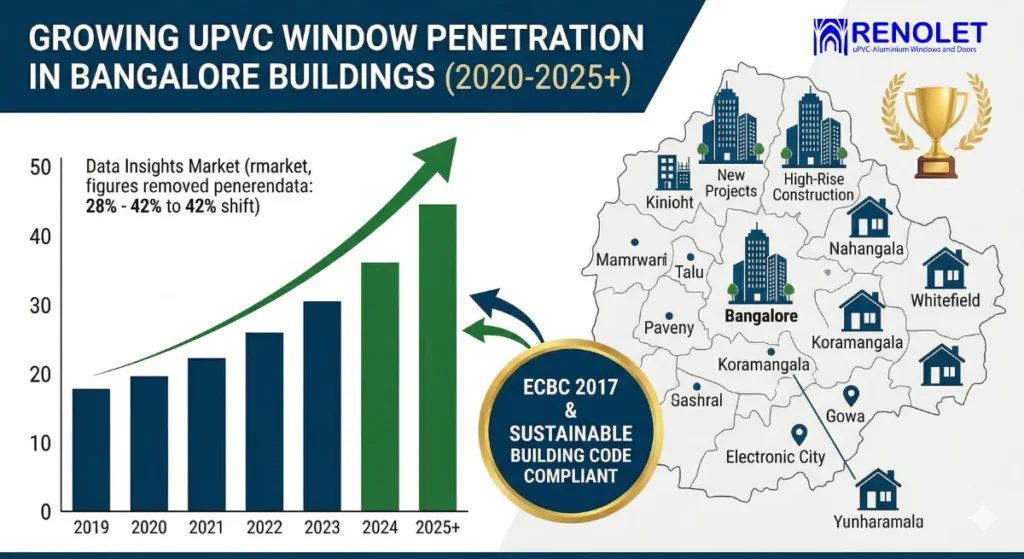
There has been a shift in the regulatory environment. The update of the Energy Conservation Building Code 2017 introduced voluntary tiers that are rewarding 2550% energy saving by positioning uPVC profiles as a complying product, and future Energy Conservation and Sustainable Building Code requirements referenced in the Economic Survey 202425 continue to incorporate thermal-performance metrics into building approvals. Mordor Intelligence.
The market reaction has also been evident. The percentage of UPVC window penetration in new construction projects has increased by 28 to 42 over the last five years Data Insights Market and the figures in that change are noteworthy. The India uPVC doors and windows market is projected to reach USD 1.49 billion by 2025 and is anticipated to increase by USD 1.6 billion in 2026 to USD 2.27 billion in 2031 with a CAGR of 7.28. Mordor Intelligence South India, Bangalore is already 29.10% of 2025 revenue – Mordor Intelligence, the image of how much the southern urban market has already adopted performance fenestration.
How Renolet Designs Eco-Friendly uPVC Windows for Bangalore Climate
Renolet engineers every window system for measurable outcomes, verified U-values below 1.4 W/m²K, certified STC acoustic ratings, and glazing options tuned for South India’s solar geometry. For Bangalore homeowners, this is not a luxury upgrade. It is a long-term infrastructure decision with a payback period under five years and a 30-to-40-year performance horizon.
The window you choose today will either cost your home energy for the next three decades or save it.